The problems behind
the products we build.
Stories about the people, ideas and real-world problems behind Tswelopele Synergy — alongside a build journal documenting why we create particular products and how the problems shape the solutions.
Start with a real problem
Our products begin with a gap we can observe, understand or explain — not with technology looking for a problem.
Build to learn
Prototypes help us test assumptions, improve workflows and make ideas tangible before they require larger investment.
Design for context
We build around the realities of South African businesses, communities, infrastructure and access — including mobile-first and multilingual needs.
Founder Spotlight: Thapelo Tlailana Wins CIPC IP Youth Award 2026
On March 26, 2026, Thapelo Tlailana, founder of Tswelopele Synergy Solutions, was named the winner of the CIPC IP Youth Award for Innovation for Sustainable Impact — a national accolade marking a shift in how South Africa values youth-led technical architecture.

 CIPC IP Youth Awards 2026
People, milestones and ideas.

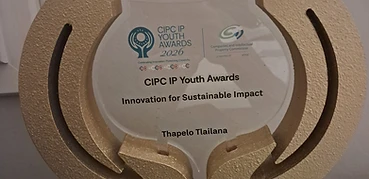 CIPC IP Youth Awards 2026
Founder Spotlight: Thapelo Tlailana Wins CIPC IP Youth Award 2026
On March 26, 2026, Thapelo Tlailana, founder of Tswelopele Synergy Solutions, was named the winner of the CIPC IP Youth Award for Innovation for Sustainable Impact — a national accolade marking a shift in how South Africa values youth-led technical architecture.
Read story → Vula Finance
Before a small business can access finance, it has to make its finances visible
South Africa has millions of small and informal businesses, yet many owners still operate without the financial records, banking access and administrative infrastructure that make a business easier to understand. Vula Finance asks whether financial management can be made simpler, more accessible and more practical for the people actually running these businesses.
Read story →Why we built it.
The background behind our products: the problem we observed, the evidence we found, the assumptions we are testing and the reason a particular product took shape.

 Carry It
Transport is a major part of South Africa's economy and labour market, with about 1.12 million people employed in the transport sector in Q2 2025. Carry It asks a narrower question: can existing bakkies, vans and trucks be matched more easily to bulky-item jobs?

 E-SPANE
Informal-sector employment accounted for 19.5% of total employment in Q4 2024, while 1.9 million people were running non-VAT-registered businesses in 2023. E-SPANE starts with the practical question of how trust and verification could work in informal hiring.

 Harvest Connect
South Africa's government has cited estimates of about 10 million tonnes of food wasted each year, while the Department of Agriculture identifies market access as a continuing challenge for small-scale producers. Harvest Connect explores the connection between local supply and buyers.

 RÉCIR
RÉCIRStats SA's 2025 General Household Survey found that 10.5% of households separated or sorted recyclable material for recycling, with Limpopo at 6.2%. RÉCIR explores the coordination layer between the people, organisations and businesses participating in the circular economy.

 Leeto Travel
Stats SA's 2024 General Household Survey found taxis were used by 34.0% of households in the week before the survey. Leeto Travel asks whether existing journeys can also become part of the inter-provincial travel network.

 Pele Transit
In 2024, 25.9% of workers travelled to work by private car and 24.3% by taxi. Pele Transit explores what better coordination of employee transport could look like before making any claim about congestion or emissions.

 Kasi Express
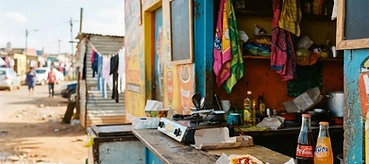
Stats SA reported that 48.2% of informal businesses were in the trade industry in 2023, while 34.3% needed marketing support. Kasi Express explores a digital commerce layer built around local businesses rather than replacing them.

 Anthology
South Africa already maintains a national digital heritage inventory through SAHRIS. Anthology explores a more personal layer: connecting physical memorials with biographies, timelines and family memories.

 Studio
Driving Change: Digital Products for Real-World Challenges
Digital products are increasingly becoming part of how people access services, markets and information. Stats SA reported that 85.6% of South African households had Internet access through at least one means in 2025, while only 20.6% had fixed Internet at home. The gap between access and the way people access it matters when we design digital services.
Read insight →
 Prototype Lab
From Idea to Impact: Harnessing Innovation for Growth
A prototype is not proof of impact. It is a way to test an idea before making larger claims. South Africa's digital-skills policy has increasingly emphasised practical digital capability for SMMEs, including e-commerce, digital marketing and online transactions. We look at what evidence-led product development means in practice.
Read insight →