A memorial can be a record, not only a marker
South Africa already maintains a national digital heritage inventory through SAHRIS. Anthology explores a more personal layer: connecting physical memorials with biographies, timelines and family memories.
By Thapelo Tlailana
Founder & Digital Solutions Specialist, Tswelopele Synergy Solutions
23.3%
increase in digitally recorded moveable heritage objects (SAHRA 2025 newsletter)
01What a headstone leaves out
A memorial usually carries a name and two dates, sometimes a line of text. It marks a person, but not the life: the photographs in an album, the stories relatives tell, the places and moments that made someone who they were.
Those stories often depend on the people who hold them. When that generation passes, so can the stories, even though the physical memorial remains. Anthology began from this recognition.
02What the evidence says
SAHRA describes SAHRIS as South Africa’s online heritage database, recording and archiving known heritage sites and supporting digital heritage collections management. Its 2025 National Inventory newsletter reports a 23.3% increase in digitally recorded moveable heritage objects following major institutional uploads.
This shows that digital records of heritage are already valued at national level. Anthology extends that idea to the personal and family level.
03A more personal layer
National inventories deal with sites and objects of wider significance. Families have their own heritage, which no inventory will record: a grandmother’s biography, a father’s timeline, the photographs that explain a face.
Anthology explores whether that personal layer can be kept alongside the physical place of remembrance, rather than instead of it.
04The question we asked
Could a personal memorial carry a richer digital record of someone’s life without replacing the physical place of remembrance?
05What Anthology is designed to do
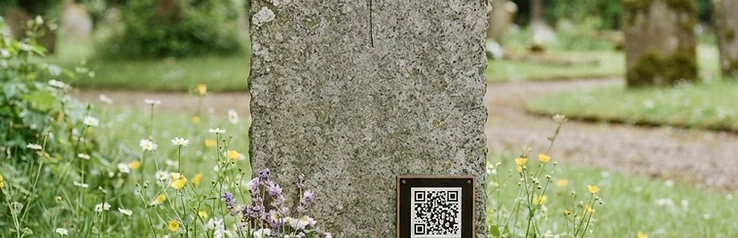
Anthology is a memorial platform built around biographies, timelines and QR-linked grave tags. The physical marker stays exactly where it is; the tag is a doorway to the fuller story behind it.
06Privacy, consent and stewardship
A memorial platform handles some of the most personal information there is, and the design questions are as much ethical as technical. Who may create or edit a profile? What happens when relatives disagree about how a person should be remembered? Who looks after the page over decades, and what happens to it if a service ends?
There are practical questions too, such as how a tag will withstand outdoor conditions over time. These questions decide whether a memorial platform deserves trust, and they are central to what we are testing.
07How a memorial profile might grow
A profile could start with the basics: a biography, a few key dates and a photograph. Over time, family members might add a timeline, more photographs and memories. The point is that the record can keep growing after the marker is placed, which a physical memorial by its nature cannot.
That growth needs rules. Who can add to a profile, who can remove something and how disagreements are resolved all affect whether a family experiences the platform as a gift or as a source of conflict.
08The physical side
A QR-linked tag has to survive weather, time and handling. It also has to be placed where it is permitted, which would involve the people who manage memorial sites. These are practical questions that sit alongside the digital ones, and a good concept has to answer both.
09Respecting different ways of remembering
Families, communities and faiths remember the dead in different ways. A platform that imposes a single format risks feeling foreign or intrusive. Flexibility is built into the design, since some families will want very little online while others will want a great deal.
10What we are testing
The prototype covers how a memorial profile is created, maintained and accessed through a physical marker. The next stage is working with families and memorial-site managers to refine profile creation, access and tag durability.
Anthology
Memorial platform with biographies, timelines, and QR grave tags to preserve legacies.